
Meal Planning for ADHD: Reduce Decision Fatigue and Eat Better
If you’re neurodivergent, meal planning can somehow become a task that contains about 47 other tasks… I know, because I’m AuDHD and I’ve been doing some version of meal prep/organisation for the last 12 years.
You have to decide what you want to eat, find recipes, make a grocery list, check what you already have, shop, prep ingredients, remember what needs using first, actually cook the meals you planned… and then do all of it again next week.
Most of us know what to eat, know what gets us to the goals, and can still create something that contains too many decisions and too many opportunities for the system to fall apart (cue: ordering in dinner by Thursday and going to work without lunch by the end of the week).
So, for me, instead of trying to just make hundreds of food decisions every week, I try to reduce how many decisions I need to make in the first place.
This is the system I use personally and the same kind of approach I often encourage my clients to use.
1. Stop trying to create an exciting new menu every week
One thing I notice a lot with neurodivergent brains is that we can see an entire world of possibility at once.
There are hundreds of recipes you could make. Different cuisines, different breakfasts, things you’ve saved on Instagram, meals you saw on TikTok, recipes in cookbooks, foods you suddenly remembered you like…
And instead of all of that choice feeling freeing, it can make the decision-making process grind to a halt.
You end up scrolling through recipes for 40 minutes, getting overwhelmed, deciding nothing sounds quite right, and then somehow you still don’t know what you’re eating for dinner.
That’s why I don’t think every week needs to be an exciting new menu.
If you find a breakfast that:
you enjoy,
keeps you full,
fits your nutritional needs,
and is easy enough to make regularly,
there is absolutely nothing wrong with eating it most mornings.
The same goes for lunches, snacks and even dinners.
I usually encourage people to create a small rotation of reliable meals rather than constantly searching for new recipes.
You might have:
2–3 breakfasts
2–3 lunches
4–6 dinners
a handful of easy snacks
Then you rotate through those depending on what you feel like eating or what you get bored of.
You can still try new recipes. You just don’t need seven brand-new dinners every week.
For a neurodivergent brain, reducing the number of possibilities you need to choose between can make feeding yourself feel much more manageable.
2. Have “default meals” for low-capacity days
This one is especially important.
Your nutrition system shouldn’t only work when you have lots of energy, plenty of time and a fully stocked fridge.
You do actuallyyyyy need meals for the days where cooking feels like one task too many.
I encourage clients to have a few minimum-effort meals that require almost no thinking.
For example:
Pre-cooked chicken + microwave rice + frozen vegetables
Eggs on toast + fruit
Greek yoghurt + fruit + cereal or granola
Wraps with pre-cooked protein, salad and sauce
Microwave potato + tuna + salad
Rotisserie chicken + bagged salad + bread
A simple protein smoothie plus something substantial alongside it
Convenience food is not automatically “bad” food.
Pre-cut vegetables, frozen produce, microwave rice and pre-cooked proteins can be incredibly useful tools if they make the difference between eating a reasonably balanced meal and accidentally surviving on snacks because cooking felt impossible.
The goal is to reduce friction.
3. Build meals using a simple framework
I also find meal planning becomes much easier when you stop thinking in terms of individual recipes and start thinking in components.
Most of my main meals have some combination of:
Protein + carbohydrate + plants + flavour
You don’t need to analyse every meal to death.
Having a basic structure makes it much easier to look in your fridge and construct something.
4. Plan around your actual week
Before choosing meals, look at your calendar.
This sounds obvious, but it makes an enormous difference.
If you have three late work nights, that probably isn't the week to plan three elaborate dinners that take an hour to cook. Or to need to do a mid-week grocery shop.
If you train early in the morning, you might want breakfasts or pre-training food that you can prepare quickly.
I usually think about:
When might I be tired?
Which days am I training?
Are there meals out booked in?
Am I travelling?
Do I need portable food?
Which days have the most work tasks?
Then I plan food around the life I’m actually going to live.
5. Save your recipes in one place
Another mistake I see is having recipes scattered everywhere. Screenshots, IG saves, Pinterest, dog-eared cookbooks on your shelf.
You think you’ll find them later.
You probably won't.
I like having one central recipe library.
Inside the Eat Run Lift app, for example, I can bookmark recipes I like and then drag and drop them straight into my weekly meal planner.
You can access this with our nutrition only membership here: https://eatrunlift.me/kitchen
Or inside Power Curve!
That means when I'm planning food, I'm not starting from zero.
I'm choosing from meals I've already decided I like.
6. Let your meal plan create your shopping list
Grocery shopping becomes much easier when the meal planning happens first.
My order is basically:
Calendar → meals → grocery list → shopping
Not:
Wander around supermarket → buy random things → get home → somehow create meals.
In the ERL app, I can add meals into the planner and use that to help create the grocery list.
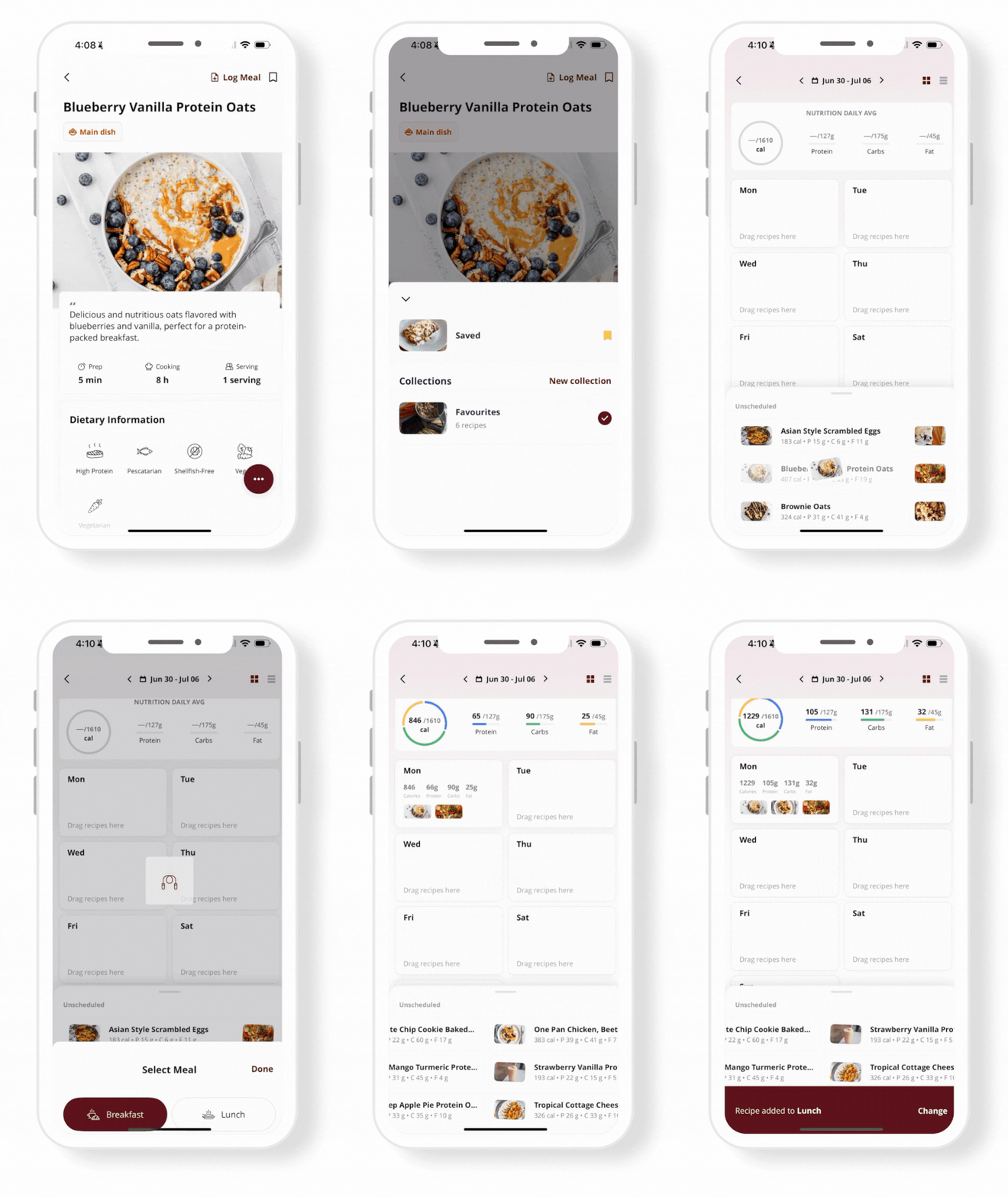
Even if you're doing this manually, the same principle works.
It also reduces the classic problem of buying heaps of “healthy food” with no actual plan for turning it into meals.
7. Use ingredients across multiple meals
I deliberately choose meals that overlap.
If one recipe needs half a bunch of potatoes, I’d rather have another meal later in the week that uses the rest.
If I’m cooking rice, I can use it with multiple meals.
If I'm preparing chicken, some might become dinner and some might become tomorrow's lunch.
This makes grocery shopping easier and reduces food waste.
It also means meal preparation becomes less complicated because you're preparing components that can do multiple jobs.
8. Prepare the annoying part
You do not necessarily need to spend four hours on Sunday meal prepping 21 identical containers.
Instead, ask: Which part of cooking creates the most resistance for me?
Then prepare that.
Maybe you hate chopping vegetables > Buy them pre-cut or chop several days' worth at once.
Maybe protein takes too long > Cook a larger batch.
You get bored of your meal prep > Prep batches of ingredients that you can mix-and-match
Sometimes removing one annoying step is enough to make you actually cook and eat it.
9. Have backup food in the house
There will be weeks where the plan goes sideways, and that’s something your system should expect.
I like having foods around that can become a meal without much effort.
Things like:
frozen vegetables
frozen or pre-cooked proteins
canned tuna or salmon
roast chicken
microwave grains
wraps
bread
yoghurt
fruit
simple sauces
Think of these as your nutrition safety net.
If you get home exhausted, you don't need to order takeaway purely because the dinner you originally planned now feels too tiring.
There should ideally be another option between “cook the original meal perfectly” and “give up entirely.”
10. Make food visible if you tend to forget it exists
Object permanence can be very real for many neurodivergent people.
If berries disappear into the back of the fridge, they may effectively cease to exist until you discover them looking like hairy lil gremlins when you decide to do a fridge cleanout.
So organise your kitchen around how your brain actually behaves.
You might:
keep frequently used foods at eye level
put food that needs using soon at the front
use clear containers
have a visible snack basket
keep your usual breakfast ingredients together
create a section of the fridge for “eat this first”
11. Don't make hunger the point where you start making decisions
This is a big one.
If you wait until you're extremely hungry to decide what you’re eating and what you have to do to make it you've created a boulder for yourself that you now have to push up a hill.
Planning food earlier means hungry-you has fewer decisions to make :) !
This is especially useful if you know you're prone to grazing, ordering food impulsively or standing in the kitchen eating random ingredients (or not eating at all) because preparing an actual meal suddenly feels overwhelming.
12. Make the plan flexible enough that you don't rebel against it
Meal planning is not a contract !!!
If Tuesday's dinner suddenly sounds disgusting, eat Thursday's dinner instead, let’s break that all-or-nothing thinking and create some flexibility.
If your appetite changes, adjust.
If you're exhausted, use your backup meal.
I don't like systems where one unexpected event makes the whole thing feel ruined.
The point is to create options and reduce decisions, this is particularly important if you have an all-or-nothing personality.
Want to see the full organisation system I use?
Meal planning is only one part of the way I organise my life around my brain :)
I’ve put together a free workshop where I walk you through the actual organisation system I use as a neurodivergent person, including how I organise my tasks, how I change the amount of structure depending on what my brain needs that week, how I plan my days, and how I try to get as much information out of my head as possible so I’m not constantly relying on myself to remember everything.
And no, it’s not a “wake up at 5am and perfectly time-block every minute of your life” system.
It’s the system I’ve built because sometimes I need quite a rigid plan to function well, and other times I need something much more flexible~~~
[Watch my free organisation workshop here →]
If you’ve tried productivity systems before and eventually abandoned them because they felt too rigid, too complicated, or like they only worked when you were having a perfect week, check it out, it’s free!

Hey there, I’m Rachel!
NUTRITIONIST, PERSONAL TRAINER, WELLNESS COACH
If you’re ready to ditch the all-or-nothing mindset and build a strong, confident body—you're in the right place.
✨ Start with my free 5-day Mini Mindset Reset to design a healthy lifestyle that actually fits your life.
🍑 Or join The Power Curve Method, my signature hourglass training program built to shape your glutes, waist, and mindset from the inside out.
While we make every effort to make sure the information in this website is accurate and informative, the information does not take the place of medical advice.