
When to Add Weight and When to Add Reps (and Why It Matters for Your Shape)
Okay so you're standing at the dumbbell rack with a 10kg and a 12kg in front of you.
The programme says 8 to 12 reps.
You can get 12 with the lighter pair and maybe 7 with the heavier one, and somewhere in your head are two pieces of advice:
heavy lifting is the only way to build shape, and
higher reps are what really grow your glutes.
So which one helps you build that hourglass shape you're after?
Both can.
How you use them matters far more.
Heavier weights and more reps can both build muscle
Muscle growth isn't locked to one rep range. Studies comparing lighter and heavier loads have found similar muscle growth across a wide range of reps, provided the sets are taken close enough to failure.
What builds muscle is 3 things working together:
the weight you choose,
the number of reps you do, and
how challenging the set is by the end.
A set of 6 with a heavy weight and a set of 15 with a lighter one can both do the job.
They just get there differently.
Where you build muscle matters for the shape you want
An hourglass comes down to proportion.
Fuller glutes and legs, a wider upper back, rounded shoulders, and a waist that looks smaller next to all of it.
So before you think about reps, think about where the work is going.
An hourglass-focused programme chooses exercises that develop your glutes, shoulders and back, and spreads that work across the week so each area gets trained often enough to grow.
Progression comes next, on the movements that matter most.
Training can build muscle where you want it.
Your genetics and skeletal structure also shape your proportions, like the width of your hips and shoulders and where your body tends to store fat.
Training works with your frame, and it can still change a lot about how your shape looks.
When should you add reps, and when should you add weight?
This is where most of the guesswork lives, so here's the simple version.
Say an exercise has a target of 8 to 12 reps.
You choose a weight you can lift for 8 good reps, with the technique and effort the programme asks for.
Over the following sessions, you work your way up through the range. 8 reps, then 9, then 10, then 11, with every rep looking and feeling the same. Once you meet the programme's progression criteria, for example 12 solid reps across all your sets, you increase the weight.
Your reps drop back towards 8, and you climb again.
Reps first, then weight. Then reps again.
It's slow on purpose.
Each small step gives your muscles a reason to adapt, and it gives you a clear target every time you come back to that exercise.
Want the guesswork taken out?
Knowing when to add reps and when to add weight is one piece.
Knowing which exercises deserve that progress, how hard your sets should be, and how many sessions your week actually needs is the rest of it.
Check out Curve Code.
It's my five-day mini course: one short lesson a day, around 15 minutes each, breaking down the four-part framework I use to build a stronger, more hourglass physique on three or four sessions a week.
You'll also get my training splits and my Busy Gal Meal Generator.
Finish all five lessons inside your access window and you'll unlock a reward I keep back for the women who make it to the end.
A heavier number only tells part of the story
Watching the number on the dumbbell go up is satisfying.
BUT it only means something significant if the rep stays clean.
If moving up a weight means every rep gets shorter, your hip thrust turns into a lower-back arch, or your row becomes a full-body heave, the movement has changed.
You're lifting more, and it's much harder to tell whether your glutes or back are getting any stronger.
When that happens, stay at the weight you've got and improve the movement first.
Full range, steady control, the same rep every time.
Keep your range of motion and technique consistent from week to week, and the heavier number becomes progress you can trust.
Higher reps still need to be challenging
Higher-rep sets have a reputation as the burn work.
The burn is real, and it can feel very productive.
It just isn't a reliable measure of whether a set will build muscle.
What matters more is how close you get to the point where you couldn't do another good rep.
A useful guide: by the end of a set, you should have around one to three good reps left in you.
If you finish a set of 20 and could easily do another 10, the weight is too light, however much it burns.
Endless reps aren't the goal either.
Choose a weight that makes the top of your rep range genuinely hard.
Different exercises can suit different rep targets
A good programme won't force every exercise into the same range.
Big, stable movements like hip thrusts, squats and Romanian deadlifts can be loaded heavily and safely at lower reps.
Smaller movements like lateral raises, rear delt flyes and cable kickbacks usually work better with higher reps, because loading them heavily tends to make technique fall apart before the target muscle gets much work.
Comfort and fatigue matter too.
Some exercises feel great on your joints at 15 reps and awful at 5.
Heavy sets on big lifts take more out of you, so they need to be balanced across the week.
When I write a block, the rep target is chosen exercise by exercise.
If you see different ranges across one session, that's deliberate.
Look for progress across weeks
Write it down.
The weight, the reps, and a quick note on anything relevant, like "paused at the bottom" or "felt this in my lower back".
Then judge your progress over weeks.
One brilliant session after a great night's sleep doesn't mean you should jump up two weights, and one flat session in a stressful week doesn't mean you've gone backwards.
The trend tells the truth.
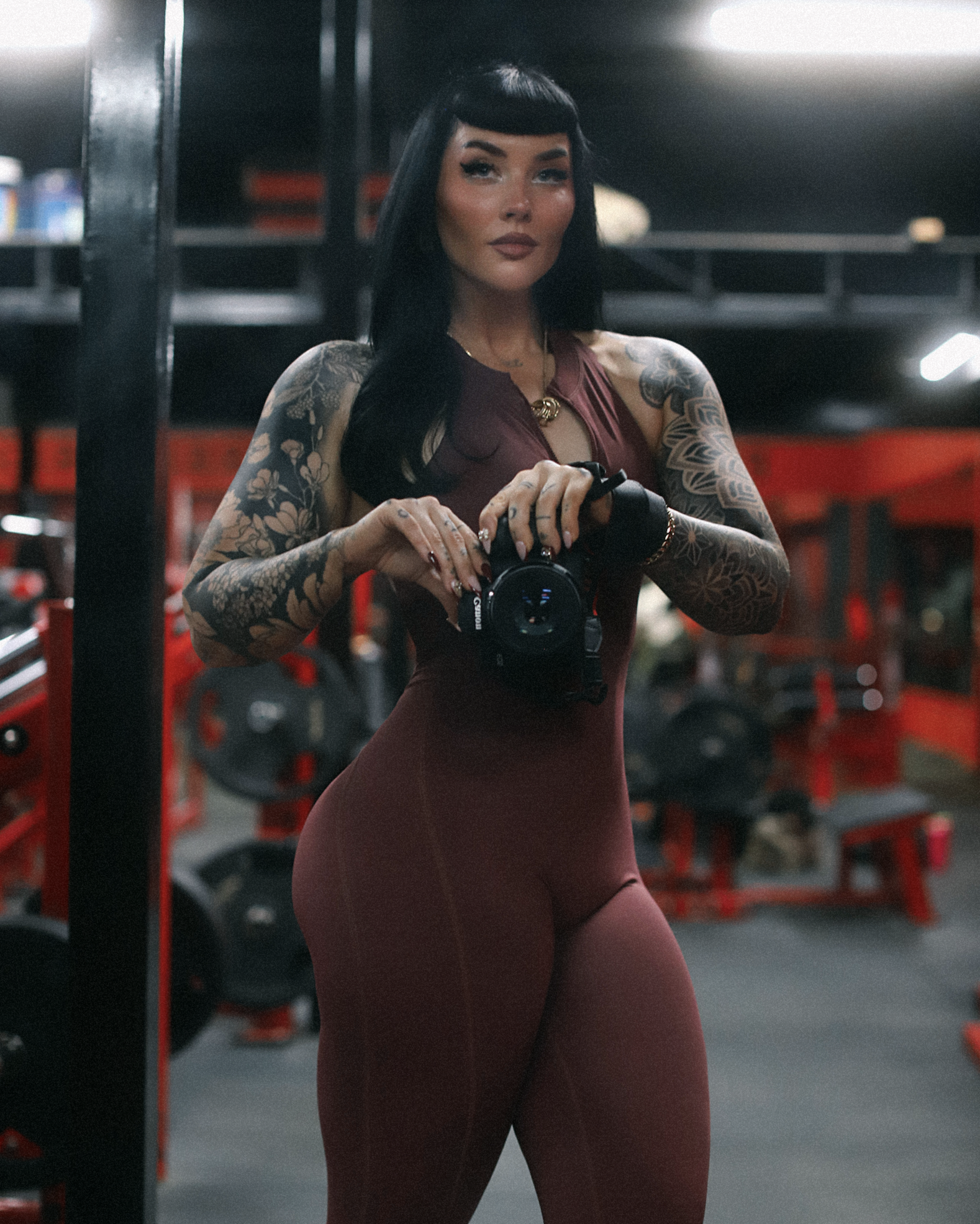
Hey there, I’m Rachel!
NUTRITIONIST, PERSONAL TRAINER, WELLNESS COACH
If you’re ready to ditch the all-or-nothing mindset and build a strong, confident body—you're in the right place.
✨ Start with my free 5-day Mini Mindset Reset to design a healthy lifestyle that actually fits your life.
🍑 Or join The Power Curve Method, my signature hourglass training program built to shape your glutes, waist, and mindset from the inside out.
While we make every effort to make sure the information in this website is accurate and informative, the information does not take the place of medical advice.