
Before You Start a New Training Programme, Ask These 7 Questions
It's 9:40pm and you've got three programmes open in three tabs.
Each one promises your goal physique...
One has the best before-and-afters,
one has the hardest-looking workouts,
and one is on sale until midnight.
You can lose a whole evening comparing them and still have no idea which one deserves ten weeks of your life...
I've been writing programmes and coaching women 1:1 for almost a decade.
I've also spent stretches of my own training knowing what it feels like to do more than you need to: five and six days a week, cardio on top, and so much fatigue that I looked puffier and recovered worse.
So when I look at a programme now, one question sits underneath everything else.
Can I build momentum with this?
Here are the seven questions I work through to answer it.
1. Does it actually train for the result I want?
A programme can be beautifully designed and still be the wrong one for you.
If your goal is an hourglass shape, the plan has to prioritise the muscles that create it: glutes, shoulders and back. So look at where the work goes.
How many sessions train your glutes properly?
Is there real back and delt work, or one lat pulldown tacked onto the end of a leg day?
Is that work spread across the week, so each area gets trained with enough volume?
Every exercise should have a clear purpose. If you can't work out what an exercise is doing for your goal, that's worth noticing.
2. Can I fit the essential sessions into my normal week?
Picture a normal week.. and by that I mean a slightly messy one: a late meeting, a night of bad sleep, a dinner you forgot you'd said yes to.
Now look at the programme.
How long are the sessions?
How far is your gym?
Do you have the equipment it asks for?
How many days can you realistically protect, every week, for ten weeks?
Try to avoid choosing a program based on how you 'wish' your weeks were, and base the choice in what the current reality is instead.
3. Is there room to recover between sessions?
The number of training days only tells you part of the story.
Look at how much demanding lower-body work there is, and where it sits.
Two hard leg sessions on back-to-back days feel very different to the same work with a day between them.
Then zoom out.
Does the plan leave room for sleep, work, your steps and anything else active in your life?
More work only helps when you can recover enough to benefit from it. Past that point, you're collecting fatigue.
4. Can I see how I'm supposed to progress?
When you're looking at a program does it give you specific guidance on how hard each set should feel, and how things are meant to get harder over time?
When you come back to an exercise, you should know what you're trying to improve.
A little more weight.
One more rep.
Cleaner control through the hardest part of the movement, etc~
A training program needs a direction.
10-12 weeks of random workouts to tick off won't take you anywhere near as far as something with structured progression.
5. Is the workload right for where I am now?
Be honest about the last couple of months. How consistent has your training been? How much capacity do you have right now?
If you've been training on and off, jumping straight into five demanding sessions a week is a big ask. And if you finish week one completely wrecked, that tells you very little about whether the plan is effective. Mostly it tells you the starting point was a long way from where you were.
6. What happens when I have a difficult week?
You will have one. Probably several.
So find the plan's answer before you need it.
Is there a clear line between the essential work and the optional extras?
Can sessions move to different days?
Are there substitutions for when the gym is packed, you're travelling, or the machine you need is out of action?
A useful programme helps you make decisions when life gets busy, so one disrupted week doesn't turn into the reason you stop.
7. Is there enough consistency to measure improvement?
I look for key movements that repeat, and a structure I can recognise from one week to the next.
Some variety is useful.
BUT when everything changes constantly, though, you never practise a lift enough to get good at it, and you can't compare this week's performance with last month's. Repetition is how you get to watch yourself get stronger.
What all seven are really asking
Can you keep showing up, keep progressing and still have a life around it, for the full program length?
The same questions I answer when I build Power Curve
Power Curve's next training block, Ember, starts on Monday 23 November.
Here's how it measures up:
- It trains for the hourglass. The block prioritises glutes, legs, back, rear delts, shoulders and deep core, and every exercise has a job to do.
- It fits a real week. 3 essential sessions, plus an optional 4th for the weeks you have the time and energy. You can move training days around in the app, cardio is a weekly target you schedule yourself, and every lift has a home-friendly swap.
- Recovery is planned in. The Recovery Calculator helps you decide when to push and when to pull back, and there are on-demand Pilates, stretching and breathwork sessions for the days in between.
- You can see your progression. Progression is built into the block, and the PB tracker shows your lifts improving week to week.
- It's built for where you are. Ember is designed for intermediate to advanced lifters who already have a foundation of training and want more targeted change in their shape.
- The structure stays recognisable. Key lifts repeat so you actually get better at them, with my form videos and voiceover cues inside every workout.
- You're never guessing on your own. Submit your questions to my fortnightly video Q&A and I'll answer them myself.
Your nutrition lives in the same app, with macro guidance, a drag-and-drop meal planner and over 700 macro-friendly recipes. It's $44 a month, with no contract.
Week 1 starts Monday 23 November.
Join now and you'll have time to explore the app, schedule your sessions and set up your nutrition before we begin.
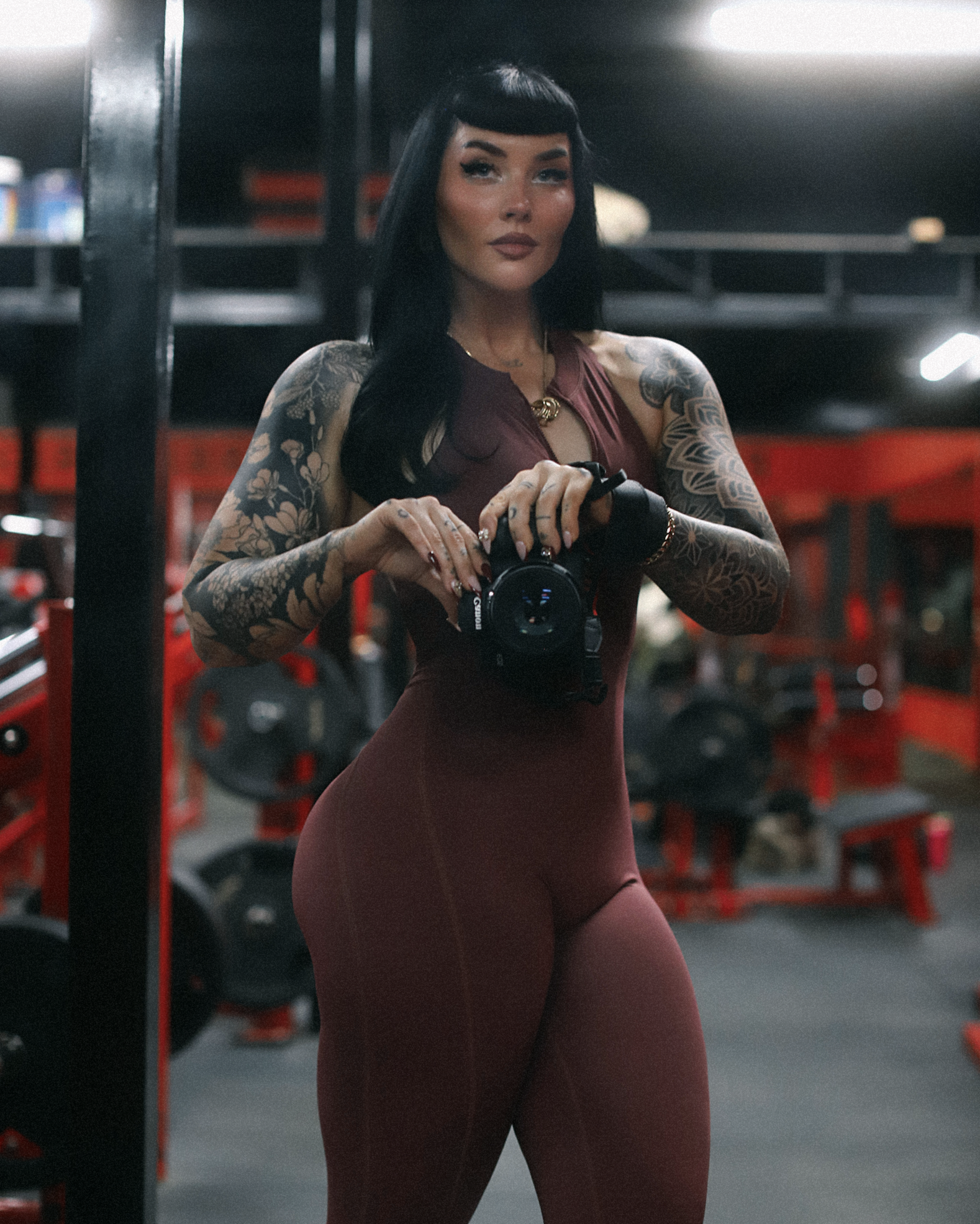
Hey there, I’m Rachel!
NUTRITIONIST, PERSONAL TRAINER, WELLNESS COACH
If you’re ready to ditch the all-or-nothing mindset and build a strong, confident body—you're in the right place.
✨ Start with my free 5-day Mini Mindset Reset to design a healthy lifestyle that actually fits your life.
🍑 Or join The Power Curve Method, my signature hourglass training program built to shape your glutes, waist, and mindset from the inside out.
While we make every effort to make sure the information in this website is accurate and informative, the information does not take the place of medical advice.