
ADHD and All-or-Nothing Eating: Why You Keep Swinging Between ‘Perfect’ and ‘Off Track’
Years ago, before I knew I was AuDHD, I remember being right at the beginning of my fitness journey and feeling like rigid rules were the thing that finally made food make sense.
I liked knowing exactly what I was meant to do. Eat this. Do not eat that. Hit this target. Follow this plan. Keep the structure tight enough and I did not have to make a hundred decisions every day.
The rules brought calm. They made things feel clear and easier to implement.
But they could backfire on me, too..
Because if I broke one of those rules, whether accidentally or on purpose, the rest of the day could suddenly feel like a write-off. A meal that did not go to plan could turn into, “Well, I have already messed it up now.” A snack I had not planned could become proof that I could not be trusted to stay consistent.
And then came that familiar promise: I’ll get back on track tomorrow. Or Monday. Or after this weekend.
Meanwhile, you spend the rest of the day, or sometimes the rest of the week, both waiting to restart and beating yourself up for not doing it perfectly in the first place.
For many people with ADHD, eating can become “perfect or off track” because the things a rigid diet asks of you, planning, task initiation, inhibition, emotional regulation, working memory, flexible problem-solving and returning to routine after a lapse, are often the exact skills that become harder when you are stressed, tired, overstimulated or overwhelmed.
This does not mean everyone with ADHD will struggle with food in the same way. It also does not mean ADHD automatically causes binge eating or disordered eating. But research does show an association between ADHD symptoms and dysregulated eating patterns, including binge-eating-spectrum symptoms and loss-of-control eating. It is also important to acknowledge that anxiety, depression, trauma, sleep problems and eating disorders can all sit alongside this picture and influence it too.
The point is that “just be more disciplined” is often a useless answer to a problem that is actually about how your brain copes with friction, stress, decisions and imperfection. Let’s chat about it >
When the future version of you feels very far away
One of the trickier parts of ADHD can be the gap between what you want long term and what feels good, easy or relieving right now.
You might genuinely care about your health.
Want to build strength, feel more comfortable in your body, have steadier energy or follow through on the goals you have set for yourself.
But in the moment where you are tired, hungry, rushed, bored or emotionally wrung out, a distant outcome can feel much less powerful than an immediate reward.
This is not unique to food, of course. It can show up in impulse spending, doomscrolling, trouble starting tasks, difficulty leaving the house on time, procrastinating going to bed or putting off something uncomfortable.
Research has found that, on average, people with ADHD show greater delay discounting than people without ADHD. In very simple terms, a reward available now can carry more weight than a potentially bigger reward that comes later.
Food is particularly good at offering an immediate payoff.
It is available. It is sensory. It can be comforting. It can give you a break from boredom. It can create a quick dopamine hit. It can interrupt a difficult feeling for a few minutes. And when you are underfed, stressed or sleep-deprived, that immediate reward can become even louder.
So when someone says, “I know what to do, I just do not do it,” I do not think the answer is to make them feel worse for that gap.
I think the better question is: What is happening in the moment where the plan becomes harder to access than the relief?
The problem with plans that leave no room to be human
Rigid food rules can feel very soothing at first, especially when you are someone who feels overwhelmed by choice.
There is a strange comfort in a black-and-white plan. You are either doing it correctly or you are not. You are either on track or off track. You have either been “good” today or you have blown it.
The problem is that life is not black and white.
You will have social events.
You will have days where your appetite is different.
You will miss meal prep sometimes.
You will get home later than expected.
You will have PMS.
You will have a stressful work day.
You will find yourself standing in the kitchen at 8pm after forgetting to eat properly all afternoon.
A plan that only works when everything goes smoothly is not actually a good plan.
It is just a plan for your best, most organised, most rested self.
Research on dietary restraint has long distinguished between more rigid and more flexible forms of control. Rigid restraint tends to involve absolute rules and all-or-nothing thinking, while flexible restraint leaves more room for moderation and adjustment. Studies have found that flexible restraint is associated with better weight-loss maintenance, while rigid restraint has been linked with less successful weight outcomes and greater attentional pull towards food and body-related cues.
That does not mean structure is bad. I love structure tbh. Most of my clients NEED structure too.
BUT there is a difference between structure that supports you and structure that only works while you are performing perfectly.
The first helps you make decisions, the second makes you panic when you cannot.
“I may as well start again Monday”
One of the most exhausting things about all-or-nothing eating is that the actual food choice is often not the biggest issue.
The biggest issue is what you make it mean.
e.g. if you have an unplanned cookie, or you go out for dinner.
Maybe you ate more than you expected or you missed your protein target.
None of those things are automatically a problem. But when the internal story becomes, I have ruined today, that is where the spiral starts.
You are no longer making one food choice.
You are turning it into a moral failing that says something about who you are as a person, and that can sting.
When you believe the day is already ruined, it becomes much easier to keep eating in a way that does not feel good, delay your next meal, overcorrect tomorrow, or decide you need to begin again from scratch next week.
One of the most useful skills you can build is learning how to return to your next meal without turning it into a moral event.
You need to eat your next meal.
That is it.
The skill to build is being able to interrupt the story that says one imperfect choice requires a complete restart.
Food can become a very fast way to change how you feel
For some people, food is mostly food.
For others, food can become a relief valve.
Eating can change the texture of a moment very quickly.
You are overstimulated, so you snack while you scroll because it gives your brain something to focus on.
You are anxious, so you want something crunchy, sweet or familiar because it feels regulating.
You are lonely, so food gives you a small hit of comfort.
You are exhausted, so cooking feels impossible and drive-through food feels like the only thing you can manage.
You are angry, disappointed or mentally fried, and food gives you a break from feeling that way for a little while.
Food can become a quick and accessible strategy for shifting an uncomfortable emotional state.
So instead of shaming yourself for needing emotional relief, become more curious about what food is doing for you in that moment.
Comfort? Stimulation? A transition out of work mode? A break from boredom? A reward? A way to avoid a task? A moment of quiet?
Once you understand the job food is doing, you have more options.
Sleep, stress and routine are not side notes
There is a reason your eating can feel completely different during a calm, well-rested week versus a stressful, chaotic one.
When sleep is poor, your appetite, cravings, emotional capacity and decision-making can all become harder to manage. Shorter or less restful sleeps are time and time again in research associated with increased energy intake, hunger, appetite, eating occasions and portion size.
This is because your body and brain operating with fewer resources.
And for people with ADHD, who may already have more difficulty with sleep timing, transitions, routines and noticing internal cues until they are urgent, this can create the perfect conditions for the “I was fine all day and then I ate everything at night” experience.
So what do you do instead?
You start by moving away from food rules and towards food anchors.
Food rules are fragile. “No treats.” “Never eat after dinner.” “I have to hit my macros perfectly.” “I cannot eat that unless I have trained.” “I need to make everything from scratch.”
Those rules might look disciplined from the outside, but they can create a system that falls apart.
This is where food anchors are different.
They are the small, repeatable things that help you stay connected to yourself even on a messy day.
Time windows for roughly when you’ll eat that day
Easy to remember mantras like “food before focus work”
A protein source at your meals
Timing your snack for before the commute home so you are not walking through the front door ravenous.
A lsit of easy dinner option that do not require motivation, creativity and a fully stocked fridge.
You MUST build a plan for your real life, not your aspirational life.
And this is a big part of how I approach nutrition with my clients. I don’t create a restrictive set of rules to perform perfectly. But rather I help you build routines that fit around actual workdays, social plans, fatigue, changing appetite and the moments where your ADHD brain is already carrying too much.
You do not need to become a different person to be consistent!!
We just need an approach that has room for the person you already are.
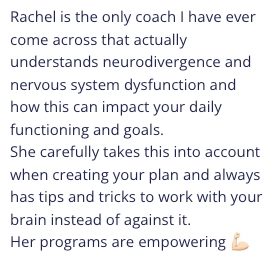
Want to work with me? Apply here > https://eatrunlift.me/coaching
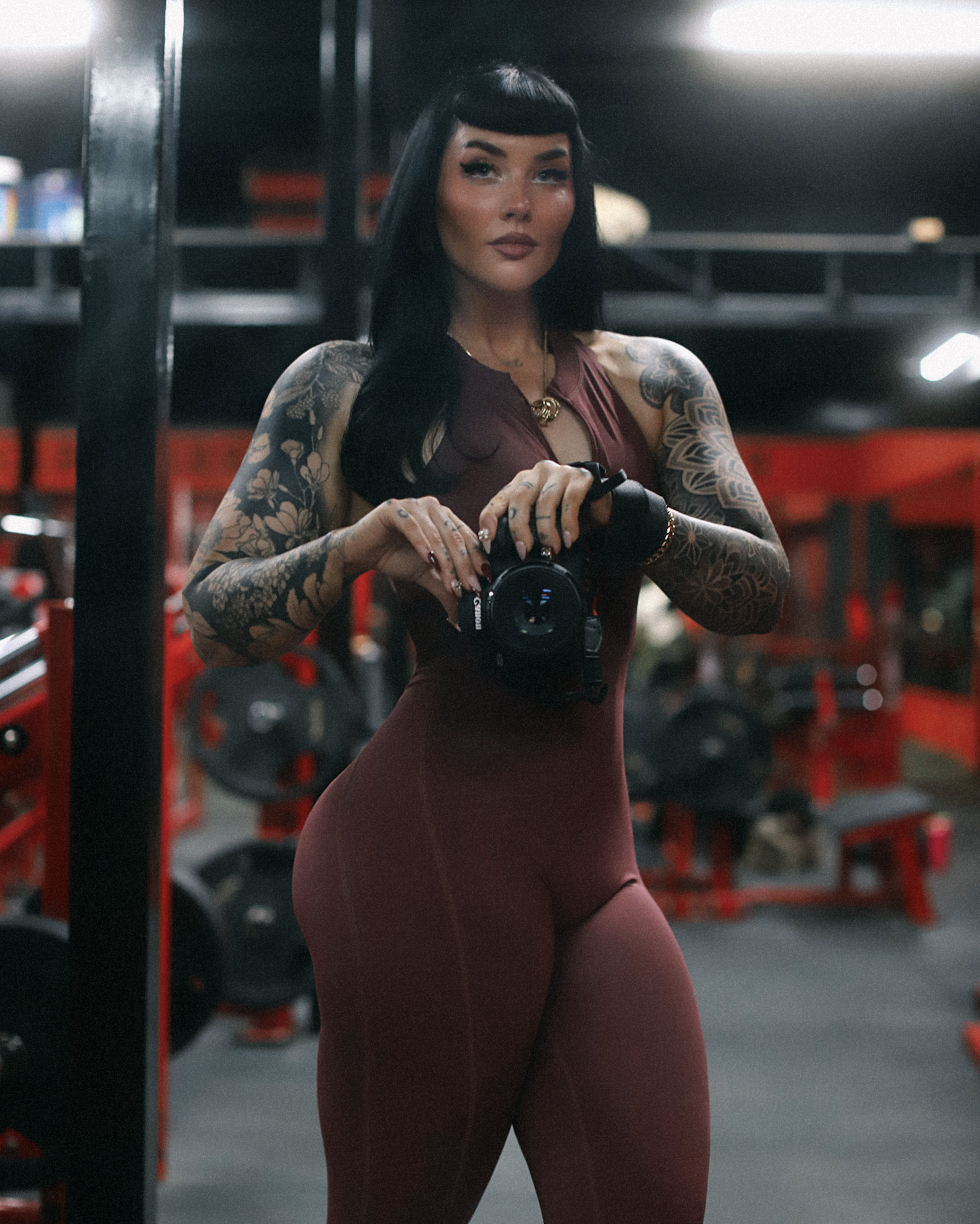
Hey there, I’m Rachel!
NUTRITIONIST, PERSONAL TRAINER, WELLNESS COACH
If you’re ready to ditch the all-or-nothing mindset and build a strong, confident body—you're in the right place.
✨ Start with my free 5-day Mini Mindset Reset to design a healthy lifestyle that actually fits your life.
🍑 Or join The Power Curve Method, my signature hourglass training program built to shape your glutes, waist, and mindset from the inside out.
While we make every effort to make sure the information in this website is accurate and informative, the information does not take the place of medical advice.