Burnout and Body Composition: The Hidden Link

Burnout and Body Composition: The Hidden Link
Okay so one thing I notice A LOOOOOT lately is that everyone is so damn exhausted.
Between work, business, family, relationships, bills, errands, training, messages, life admin, meal prep, trying to have a personality, and somehow also drinking enough water, it is no wonder sooooo many people rn feel like they have zero free time !!
And when you are already just scraping through your day, the usual fitness advice can start to feel insaley unhelpful.
“Just meal prep.”
“Just get your steps in.”
“Just sleep more.”
Fantastic. Groundbreaking. Should I also simply become a woodland fairy with no emails, no deadlines, no sensory overwhelm, no executive dysfunction, and a full-time assistant (I’d like this btw.. how do we organise it?)
The reality is this: burnout changes the way your body responds, the way your brain makes decisions, AND the way your lifestyle actually functions.
This applies to work-energy burnout: the kind where your job, responsibilities, and constant output leave you feeling fried, flat, and emotionally done.
It also applies to neurodivergent burnout: where masking, sensory overload, executive dysfunction, and a lack of proper accommodation can absolutely obliterate your capacity.
And nooooo, don’t misinterpret me, burnout does not magically break the laws of body composition or thermodynamics.
Calories still matter. Protein still matters. Training still matters. Movement still matters and so on and so forth..
But burnout can make all of those things harder to execute, harder to recover from, and harder to repeat consistently !
Burnout can increase emotional eating and reward-driven food choices
When you are stressed, tired, overwhelmed, and running on v low capacity, your brain is not calmly sitting there thinking:
“Ah yes, tonight I shall prepare a balanced meal with lean protein, fibre, starch, and healthy fats.”
Hhahahahah.
Your brain is thinking:
“Where is the fastest dopamine and can I eat it directly from the packet?”
Chronic stress can also increase cravings for highly palatable foods, especially foods that are high in sugar, fat, salt, or a deeply suspicious combination of all three. This does not mean you are weak. It means your brain is looking for fast energy, comfort, relief, and reward.
Food becomes a regulator bc your system is overloaded.
This is why burnout can create that annoying pattern where you are “good” all day, then by the evening your capacity is gone and suddenly the pantry starts whispering your full government name.
The issue is not always hunger either, it can be emotional fatigue, decision fatigue, or even just sensory-seeking behaviour.
Burnout disrupts sleep, and poor sleep makes improving body composition more difficult
Sleep length and quality affects hunger, appetite regulation, insulin sensitivity, food reward, energy levels, training performance, recovery, mood, and even how snappy you feel when someone asks you a question before 9 am.
When you are burnt out, sleep often gets messy. You might struggle to fall asleep because your brain is running through all the open loops that you need to sort out tomorrow. You might wake up constantly through the night. You might wake up like a shotgun went off at 4am and not be able to get back to sleep (this used to happen to me!)
OR you might sleep enough hours but still feel like you have been lightly run over (just a gentle little car squish).
Oorrr perhaps maybe you were up late revenge-scrolling bc the evening is the only time that feels like yours.
And then the next day, your habits that will improve your health/physique/whatever feel harder !
Poor sleep can uptick your hunger, it will also make high calorie foods feel more rewarding. And make your body reduce output. This is why sleep is one of the first variables I get clients to address, especially if fat loss is in the goals, bc trying to attempt a fat loss phase with poor sleep is going to leave you feeling like you’re fighting a racoon in a bin.. I mean it’s technically possible but unnecessarily chaotic tbh.
Rather than adding more cardio or cutting cals again, sometimes the smarter move is to fix the recovery leak first.
Burnout increases decision fatigue
This is one of the biggest reasons people fall off track, they are too cognitively cooked to keep doing it.
Meal prep requires decisions. Grocery shopping requires decisions. Training requires transitions. Tracking requires attention. Cooking requires steps.
This is especially relevant for neurodivergent people, because executive dysfunction can make “simple” tasks feel like they are behind an invisible wall.

You can see the task.
You know the task matters.
You may even want to do the task or it could be something as simple as, “go have a shower”.
And yet your brain simply says, “No thank you, we will now stare into space, keep telling you what you have to do and feel guilty at the same time.”
Burnout makes this worse because your decision-making capacity is already tanked.
So if your nutrition plan relies on you making 45 tiny good choices every day, it is probably not burnout-proof. This is why I always get my neurodivergent clients to build their nutrition strategies around their “worst day” - is it able to be followed when you’re wiped or only when you have energy and capacity?
There’s 2 ways I can help you!
If you want help planning your meals, getting organised, and finding macro-friendly recipes without having to invent dinner from the depths of your exhausted soul, you can sign up for Eat Run Lift Kitchen.

Inside the app, you get access to hundreds of macro-friendly recipes, plus an easy drag-and-drop meal planner so you can plan your week without making nutrition feel like a second unpaid job.
All this is available for only $5/month, you can join here.
Or, if you want the meals PLUS a full hourglass-focused training program with structured workouts, nutrition guidance, macro support, and actual progression, you can join The Power Curve Method.
I built this for the woman who’s done dabbling with sub-par programs. The one who’s ready to build her body strategically instead of guessing.
And because recovery matters, Power Curve also includes a Recovery Calculator to help you understand whether your body is in a place to push, hold, or pull back.
You can join Power Curve here.
Now, back to it..
Burnout lowers training performance and recovery capacity
Training is stress… Good stress, yes. Productive stress, yes. But still stress !!!
Your body does not have separate brain/body inboxes for work stress, relationship stress, sensory stress, poor sleep, low food, high training volume, and emotional chaos.
It all goes into the same recovery bucket.
And when that bucket is overflowing, your training starts to suffer.
Weights feel heavier. Motivation drops. Your pump disappears. You feel flat. You get more sore than usual. Your performance stalls. You dread sessions you usually enjoy. You start negotiating with yourself in the morning about whether to train that day.
“I’ll just do half.”
“I’ll skip legs.”
“I’ll move the workout to another day.”
When recovery capacity is low, the same program can suddenly feel too hard, even if it was perfect for you a month ago.
This is why intelligent programming matters, hint hint, go check out Power Curve if you haven’t yet :) !
Burnout reduces NEAT, steps, and spontaneous movement
NEAT stands for non-exercise activity thermogenesis, which is basically all the movement you do outside of formal exercise. Steps, errands, cleaning, fidgeting, walking around the house, standing, pacing, existing with a bit of energy.
When you are burnt out, NEAT often drops without you noticing.
You sit more. You choose the closest parking spot. You avoid extra errands. You lie down more. You move around your own house like a Victorian ghost.
So let’s say your goal is fat loss and you’ve been in a moderate deficit.. you’re getting a bit burnt out and your body starts restricting NEAT as a way to conserve energy. Bc your movement drops, suddenly your deficit might not be much of a deficit anymore.
This is why someone can say, “But I’m eating the same,” and stopped seeing progress.
Yes, but are you moving the same?
Are you training with the same intensity?
Are you sleeping the same?
Are you recovering the same?
Are you doing the same amount of incidental movement?
Probably not.
Burnout and fatigue can sneakily reduce your output while increasing your food drive.
Neurodivergent burnout can be a different beast
Autistic burnout is not just “I had a busy week.” It can involve deep exhaustion, reduced functioning, increased sensory sensitivity, emotional shutdown, loss of skills, and needing far more recovery time than usual.
ADHD burnout can come with chronic overwhelm, decision paralysis, emotional dysregulation, task avoidance, and the delightful experience of knowing exactly what you need to do while being completely unable to make yourself do it.
And when masking is involved, the cost gets even higher.
That takes energy.
A lot of it.
This is why fitness needs to be more flexible, more human, and less obsessed with pretending everyone has the same nervous system.
For neurodivergent people, the best plan is not always the most “optimal” plan on paper.
It is the plan that can actually be repeated without causing a full-system crash.
So what do you actually do?
You do not need to throw your goals in the bin and stop trying hard just because you are stressed buuuuuuut you do need to stop pretending your recovery does not matter.
If you are burnt out and your body composition progress has stalled, look at the whole picture:
Are you sleeping properly?
Are your steps down?
Are you craving more high-reward foods?
Are you training hard but recovering poorly?
Are you bloated, constipated, inflamed, or constantly puffy?
Are you relying on willpower instead of systems?
Are you neurodivergent and trying to follow advice designed for someone with completely different capacity?
Because the answer might be more like:
You need a nutrition structure that involves making fewer decisions.
You need a more intelligent training program that integrates recovery and deloads where needed.
You need better recovery habits.
You need to stop measuring your worth by whether you performed like a machine during a season where your nervous system is overwhelmed.
So if your body feels stuck right now, please do not immediately assume you are failing.
Look at the load you are carrying across all areas of your life.
Look at the systems you have.
Look at how many decisions you ACTUALLY have to make every day.
Look at whether your plan actually matches your current capacity.
Because physique change is really just about applying the right stress, recovering from it, and repeating that process long enough for your body to adapt 😊
And if your current plan is just “do more until you collapse”, I say this with love: That is not discipline, that’s your punishing yourself.
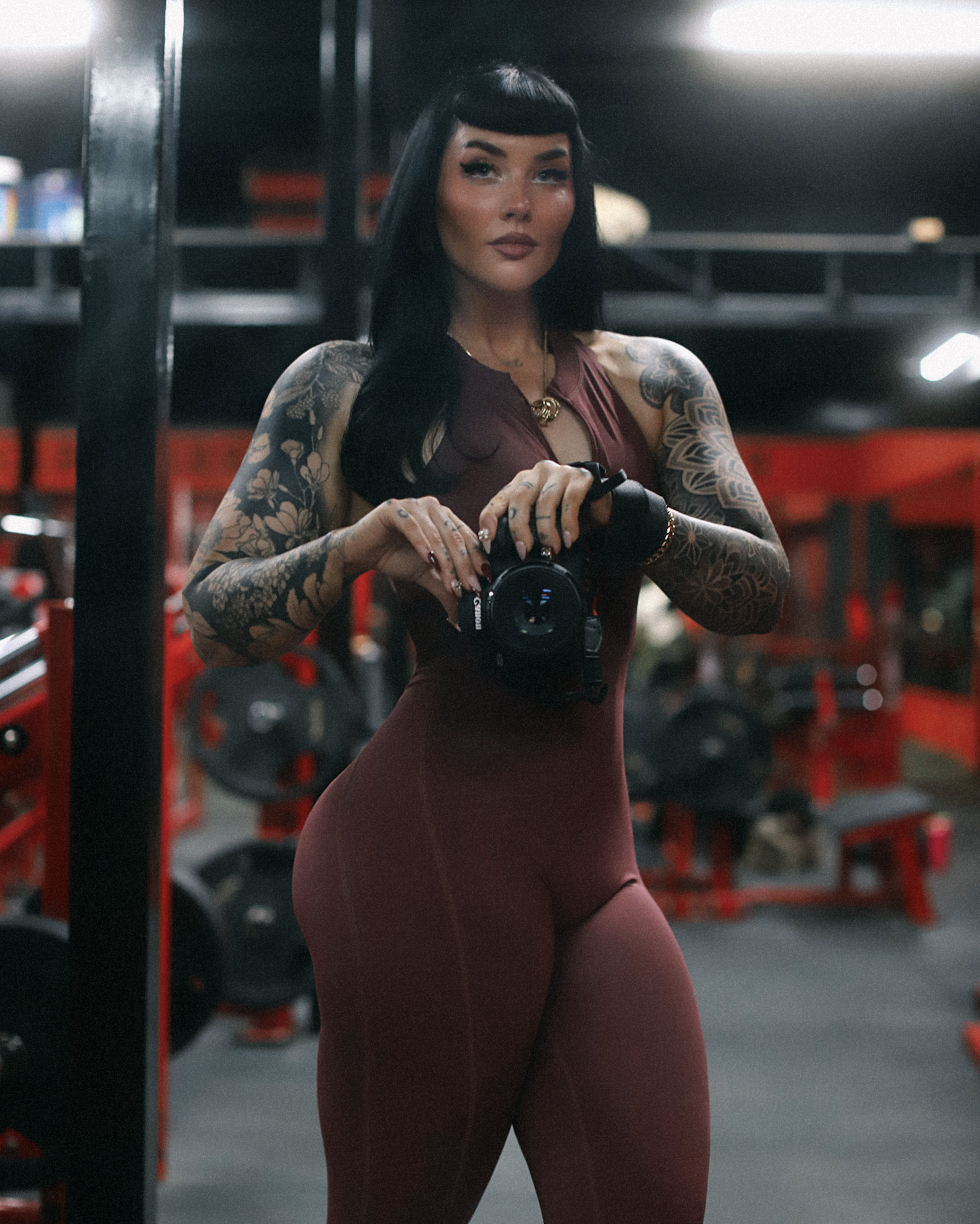
Hey there, I’m Rachel!
NUTRITIONIST, PERSONAL TRAINER, WELLNESS COACH
If you’re ready to ditch the all-or-nothing mindset and build a strong, confident body—you're in the right place.
✨ Start with my free 5-day Mini Mindset Reset to design a healthy lifestyle that actually fits your life.
🍑 Or join The Power Curve Method, my signature hourglass training program built to shape your glutes, waist, and mindset from the inside out.
While we make every effort to make sure the information in this website is accurate and informative, the information does not take the place of medical advice.