The Real Reason Fat Loss “Stops Working” in Your 30s (It’s Not Hormones)
The Real Reason Fat Loss “Stops Working” in Your 30s (It’s Not Hormones)
The Real Reason Fat Loss “Stops Working” in Your 30s (It’s Not Hormones)
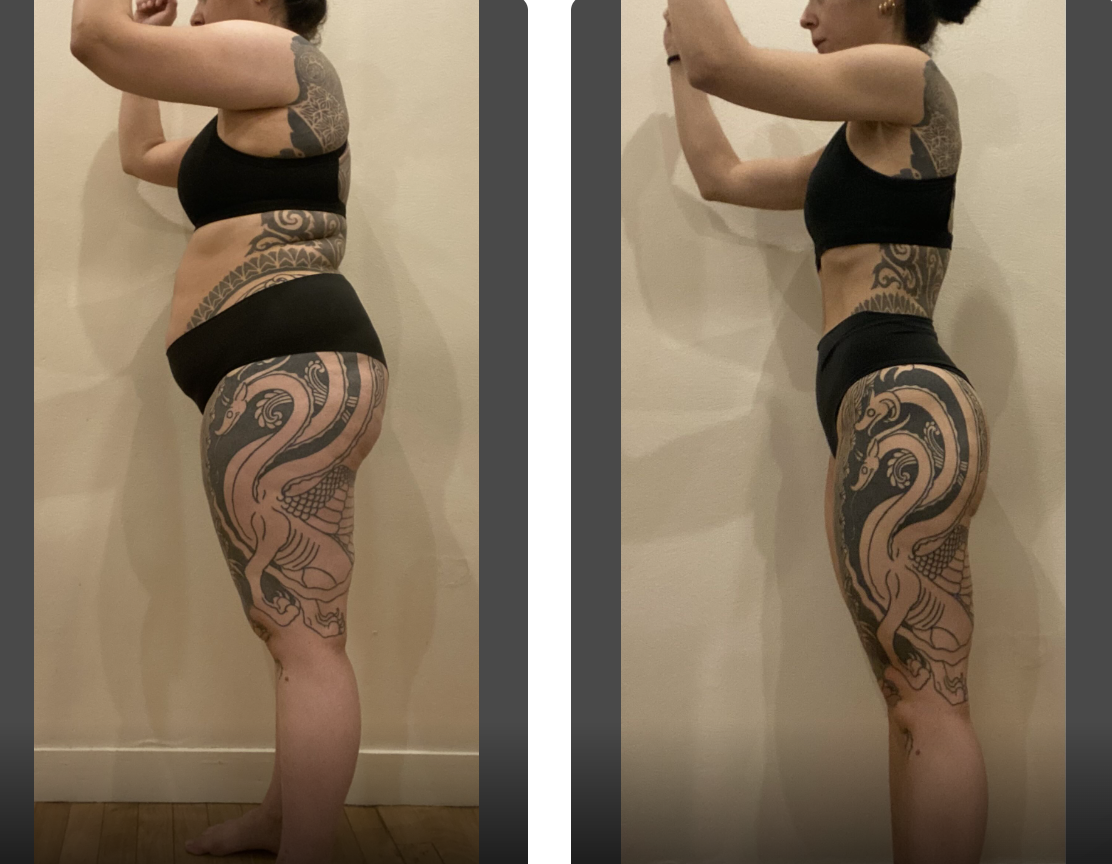
The image above is of my client K, who went from 105kg and 44% body fat to 69kg and 14% body fat in 12 months, at age 32.
If you’ve been told fat loss after 30 is “just harder”, that your hormones are broken, your metabolism has tanked, orrr that you now need extreme protocols to see results, I want to gently call bullshit… politely hahahaha.
Fat loss after 30 IS NOT doomed.
But the context your body is operating in usually is very different, and that’s what people are actually feeling.
Between the end of September ‘25 and start of January ‘26, I lost over 12kg (in 4 months).
I’m 34.
I didn’t cut out a food group. I didn’t increase my training.
Andddd surprisingly it didn’t feel like I had to beat my body into submission to get the result I was after.
After posting some pics on my Instagram story I got so many messages in response from women in their 30s feeling stuck, so let’s break down what’s really going on, and what actually helps.
Fat loss physiology doesn’t suddenly switch off at 30…
From a metabolic standpoint, resting metabolic rate declines very slowly with age, roughly 1–2% per decade. And even that decline is largely explained by loss of lean mass, not age itself.
In other words… your body didn’t wake up on your 30th birthday and decide to sabotage you.
But certain lifestyle shifts do start to matter more!
1 - Muscle mass quietly drops if you’re not strength training
After about 30, muscle loss isn’t inevitable, but inactivity and lack of load-bearing becomes more costly.
If you’re not resistance training regularly, you may slowly lose lean mass over time.
And less muscle means:
slightly lower daily energy requirements
poorer glucose disposal
a narrower margin for error with food intake
People interpret this as “my metabolism is broken”, when really, their maintenance calories have shifted slightly.
This is where many people get confused about how much they should be eating. If you’re guessing, eyeballing, or still eating based on what worked years ago, it’s easy to overshoot without realising.
This is exactly why I recommend using a proper macro calculator, one that factors in body size, activity, and goals, instead of relying on outdated rules or social media advice.
Use my calculator here:
2 - Recovery debt accumulates, and your body keeps the receipts
In your 20s, you can often get away with poor sleep, high training volume, stress, and under-eating, at least for a while~
In your 30s, the bill is due for most of us
Chronic under-recovery raises cortisol, reduces insulin sensitivity, increases water retention, and amplifies hunger. Fat loss isn’t blocked, BUT it becomes harder to see and harder to stick to those low calorie goals you’ve set.
Personally, one of the biggest shifts I made was reducing my strength training to 3 high-quality sessions per week.
Less volume = better recovery = better workouts.
The result was better body composition, better energy management, and a more “settled” look overall (less puffiness and water retention).
More training isn’t always more effective. Sometimes it’s just more stress on top.
3 - Baseline activity quietly drops
This is one of the most underestimated factors!! Your lifestyle HAS changed
As life gets busier, many people:
drive instead of walk to save time
sit more due to desk work
lose incidental movement without noticing
spend more free time sitting/relaxing
A drop of even 2–3,000 steps per day (which is like.. hardly anything btw) can completely erase a calorie deficit, without any change in food intake.
Metabolism didn’t ‘slow down’ but your daily output did.
This is why fat loss often stalls “mysteriously”, even when someone feels like they’re eating well.
4 - Diet history catches up
Many women in their 30s have spent their teens and 20s cycling through diets, under-eating protein, cutting calories aggressively, or living in a constant restrict-binge loop.
Over time, this can:
reduce lean mass
disrupt hunger and fullness cues
increase food anxiety and over-control
So by now the nervous system is often less tolerant of extremes.
5 - Hormonal changes often mean more water, not more fat
For women, perimenopausal shifts can begin earlier than most people expect. These changes don’t stop fat loss, but they do increase fluid fluctuation.
That means:
more scale weight jumping up and down
more bloating or days where you feel you look ‘puffy’
slower visual feedback
Fat loss can be occurring underneath, while the scale and mirror lag behind.
This is one of the biggest reasons women feel like “nothing is working”, when physiologically, it actually is.
6 - Online messaging makes the problem worse
Social media is full of claims that fat loss after 30 requires:
hormone detoxes
carb avoidance
extreme fasting
cutting entire food groups
This primes people to expect difficulty and interpret normal fluctuations as failure or a sign that something isn’t working. Combine that with impatience and you have the perfect recipe for quitting on something too soon.
When you expect your body to resist you, every plateau feels personal, every bloated day feels like proof something is wrong.
In reality, fat loss still responds to the same fundamentals:
adequate protein
resistance training
enough recovery
a realistic, sustained calorie deficit
—
If you’re over 30 and struggling with fat loss, the solution is rarely doing more. It’s usually doing the basics more consistently, with more respect for recovery and lifestyle context.
That means:
strength training to maintain or build muscle 3-4 days per week
eating enough protein (use the calculator above)
aligning intake to your actual needs (again, use the calculator, don’t just guess)
managing stress and sleep like they matter, because they do, more than you think
tracking progress with more than just the scale
Fat loss after 30 is not only achievable.. it’s often more sustainable once you stop fighting your body and start working with it.
Hey there, I’m Rachel!
NUTRITIONIST, PERSONAL TRAINER, WELLNESS COACH
If you’re ready to ditch the all-or-nothing mindset and build a strong, confident body—you're in the right place.
✨ Start with my free 5-day Mini Mindset Reset to design a healthy lifestyle that actually fits your life.
🍑 Or join The Power Curve Method, my signature hourglass training program built to shape your glutes, waist, and mindset from the inside out.
While we make every effort to make sure the information in this website is accurate and informative, the information does not take the place of medical advice.