Why Most Women Don’t Need a “Bulk” Phase

How to Build Shape Without Bulking (Why You Don’t Need a Crazy Calorie Surplus to Grow Muscle)
For years, the default advice for building muscle has been:
“Go into a big surplus.”
“Bulk properly.”
“You can’t grow without eating more.”
And yepppp, energy availability matters, I will NOT deny that.
But here’s what most women don’t want:
Two wardrobes.
Wild body fluctuations.
Feeling fluffy for 6 months just to “earn” muscle.
Most women (or the ones that I’ve met and worked with anyway) want to build shape while still feeling good in their body year-round.
The “Big Surplus” Myth
It’s long been assumed (and taught on the School of Social Media) that you need a substantial calorie surplus to maximise hypertrophy.
But recent evidence challenges how large that surplus actually needs to be.
“A 2023 study by Helms et al. examined the effects of a small versus large energy surplus during resistance training in trained individuals. Over 8 weeks, the larger surplus increased body weight and skinfold thickness significantly more than the smaller surplus, but did not produce meaningfully greater increases in muscle thickness (Helms et al., 2023).”
In other words:
The bigger the calorie surplus = more fat gain seen
But not necessarily more muscle gained in the process
Can You Build Muscle at Maintenance?
Short answer: Yes, in many contexts.
Across many resistance training studies, participants improve lean body mass without deliberately entering a large surplus.
This is particularly common in:
Individuals returning to training
Those improving training quality (better programming, or technique)
People increasing protein intake
Those with room to improve body composition (decrease body fat percentage and increase muscle mass percentage)
Recomposition Is Not Magic
Body recomposition, building muscle while maintaining or reducing fat mass, is supported in the literature.
Longland et al. (2016) demonstrated that participants in a calorie deficit who consumed higher protein and performed intense resistance training gained more lean mass and lost more fat than lower protein groups.
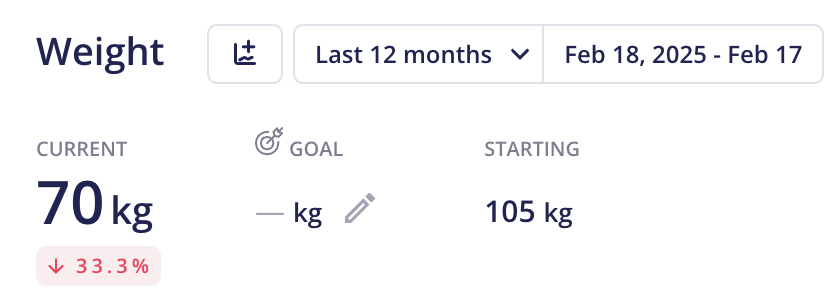
My 1:1 client Karine lost 35kg of body fat over a year whilst simultaneously building over 2kg of pure muscle:

Jan ‘25

Dec ‘25
Now, this doesn’t mean muscle gain in a deficit is optimal for advanced trainees.
But it proves something important:
Muscle growth is not exclusively dependent on large calorie surpluses.
Protein adequacy, training stimulus, and recovery matter enormously.
TBH, Bodybuilding Culture Skews The Narrative
Traditional bodybuilding uses clear bulk/cut cycles to maximise hypertrophy aggressively.
That works in competitive contexts.
And of course because the physiques are impressive naturally many people try to replicate, and then this seeps into mainstream fitness advice.
But most women are not stepping on stage.
They don’t want:
Dramatic body swings
Extreme dieting phases
Seasonal confidence
Hormonal chaos
They want sustainable, steady progress where they can wear the same wardrobe and not have to swing up and down 2-3 sizes every 6 months.
The Real Requirements for Building Shape
You need:
Progressive overload
Adequate protein (~1.6–2.2 g/kg bodyweight per day)
Sufficient energy availability (not chronic under-eating)
Consistency over months
Adequate recovery
Notice what’s missing?
“Massive surplus” 🙂
The Consistency Trap
Here’s something I’ve seen a bunch as a coach..
When women move into a “muscle building” phase, they think:
“Oh good. I can be more flexible now.”
Which slowly becomes:
Multiple meals out per week
Extra sweet treats
Larger portions
Less awareness of intake
And suddenly “maintenance” turns into a large surplus.
Even small daily overages accumulate quickly.
A 300–400 calorie unnoticed surplus can easily become several kilos of fat gain over months without significant muscle gain along with it.
So What Should You Actually Do?
Eat at estimated maintenance or a slight surplus
Prioritise protein and nutrient quality
Track habit patterns (even loosely)
Train with progressive overload
Manage recovery
Stay consistent for months
If you don’t know what your maintenance is, guessing is how accidents happen.
Use my Macro Calculator to get a personalised starting point.

Hey there, I’m Rachel!
NUTRITIONIST, PERSONAL TRAINER, WELLNESS COACH
If you’re ready to ditch the all-or-nothing mindset and build a strong, confident body—you're in the right place.
✨ Start with my free 5-day Mini Mindset Reset to design a healthy lifestyle that actually fits your life.
🍑 Or join The Power Curve Method, my signature hourglass training program built to shape your glutes, waist, and mindset from the inside out.
References
Helms ER, Spence AJ, Sousa C, et al. Effect of Small and Large Energy Surpluses on Strength, Muscle, and Skinfold Thickness in Resistance-Trained Individuals: A Parallel Groups Design. Sports Med Open. 2023;9(1):102.
Slater G., Phillips SM. Is an Energy Surplus Required to Maximize Skeletal Muscle Hypertrophy Associated With Resistance Training? Front Nutr. 2019;6:131.
Longland TM, Oikawa SY, Mitchell CJ, et al. Higher Compared with Lower Dietary Protein during an Energy Deficit Combined with Intense Exercise Promotes Greater Lean Mass Gain and Fat Mass Loss. Am J Clin Nutr. 2016;103(3):738–746.
Body Recomposition Literature (Review) Body Recomposition: Can Trained Individuals Build Muscle and Lose Fat at the Same Time? (2020).
Resistance Training and Body Composition Resistance Training as a Key Strategy for High-Quality Weight Change. PMC.
General Recomposition Evidence Editorial: New insights and advances in body recomposition. PMC.
While we make every effort to make sure the information in this website is accurate and informative, the information does not take the place of medical advice.