Training Hard and Can’t Lean Out? Read This.

The Nervous System’s Role in Fat Storage (And Why “Just Do More” Isn’t Always The Great Advice The Gym Bros Think It Is)
So I posted this reel recently. https://www.instagram.com/p/DU0COipDzwk/
Showing my highest weight 4 years ago, vs current weight last week.
I talked about the difference between training 5 days per week vs 3 and how my neurodivergent nervous system impacts that.
And obviously… the TikTok-educated gym bros arrived.
“Must be peds.”
“Probably surgery.”
“You’re a fitness influencer with free time, you should be training 5x a week and doing 45 mins cardio daily.” < One even said that and then deleted it looooool 😂
But THIS is exactly the problem.
I have coached SO MANY women who come to be after feeling burnt out, ignored, and dismissed by other coaches. They’re exhausted, their appetite is all over the place, and they’re told, “do more cardio. Less carbs next week”
I’m actually annoyed writing this if you can’t tell haha.
The “just do more” mentality completely ignores one massive variable:
Your nervous system.
Especially if you’re neurodivergent. Especially if you’re high stress. Especially if you’re not on a cocktail of recovery-enhancing drugs or peptides.
Let me give you the real facts, because if you know me, you know I have no time for BS.
Fat Loss Is Not Just Calories.. I’ll explain
Yes, calories matter a tonne.
No, you cannot break the rules of thermodynamics.
Yes, a 1000 calorie deficit will create fat loss in every human because energy balance is real.
But here’s where people oversimplify it.
Your body does not exist in a vacuum.
Fat loss is not just about the maths on paper. It’s about how your physiology behaves inside that deficit.
Fat storage is influenced by a bunch of things, like:
Cortisol
Nervous system activation
Sleep quality
Thyroid conversion
Insulin sensitivity
Inflammation
Total stress load
Chronic stress doesn’t override calories.
But it does:
Increase water retention (so fat loss looks “stalled”)
Increase hunger and cravings
Lower spontaneous movement (you burn less without realising)
Reduce recovery and training output
Decrease compliance
And compliance is what makes a deficit work.
Therefore - most effective deficit isn’t the biggest one.
Sympathetic Mode Is Not a Fat Loss Hack
Your nervous system has two main gears:
Sympathetic = fight or flight
Parasympathetic = rest, digest, repair
If you are constantly:
Overtraining
Undereating
Mentally fried
Sleeping poorly
Living on caffeine
Masking all day
Juggling 900 responsibilities
You’re spending most of your time in sympathetic dominance.
And chronically elevated sympathetic activation means elevated cortisol.
Now here’s where it gets interesting.
Chronically elevated cortisol is associated with:
Increased abdominal fat storage
Greater visceral fat deposition
Impaired insulin sensitivity
Reduced T4 to T3 thyroid conversion
Appetite dysregulation
Cortisol isn’t evil btw. It’s adaptive and necessary. BUT chronically high cortisol tells your body: “We are under threat.”
Neurodivergence & Recovery Capacity
Yeah, Let’s go there.
Neurodivergent nervous systems are not inferior.
But they often run at a higher baseline stress load.
More sensory processing.
More mental fatigue.
More cognitive switching.
More masking.
All those increase allostatic load, which is basically the cumulative stress burden on your system.
When allostatic load is high:
Recovery capacity drops
Sleep quality declines
Cortisol trends upward
Compliance drops
Binge/restrict cycles become more likely
So when someone says, “Just train 6 days a week.”
My question is:
Cool, but your nervous system actually recover from that?
Because if it can’t, you’re not effectively building much muscle.
You’re now accumulating stress.
And stress changes how your body partitions energy.
The PED Conversation (let’s be so for real rn)
Here’s the bit that’s not talked about by women much in the fitness space.
There are people giving fitness advice who are using:
Anabolics
Peptides
GLP-agonists
And other recovery-enhancing compounds
These dramatically increase recovery capacity and improve nutrient partitioning (how your body is using the food it’s given).
Which means yes, some people genuinely can train six days per week, be in a crazy strict deficit and lean out without burning out, water retention, or feeling too much like a piece of wet garbage.
But that doesn’t mean it’s optimal for a natural, high-stress, busy woman to replicate !!!!
The “Do More” Mentality Is Lazy Advice
The smarter approach is:
What is the minimum effective dose for the individual?
What gives them:
Enough stimulus for growth
Enough recovery for adaptation
Enough structure for progression
Enough nervous system safety for high compliance
Fat loss is physics.
Adherence is biology and psychology.
You can force an aggressive deficit and white-knuckle it for a few weeks. Sure.
Or you can create a system your nervous system actually feels safe inside.
Because when your brain and body feel constantly threatened, you probably don’t sleep as well, you’re hungry all the time or not at all, you’re on edge, you’re always tired, and you might be less compliant overall because of these things.
And then everyone says you “lack discipline” when really you lacked a strategy that accounted for physical and mental stress.
The approach shouldn’t to be suffer more to get to your physique and health goals.
Want a look at the structure that myself and hundreds of my program members use?
Download my free Hourglass Blueprint.
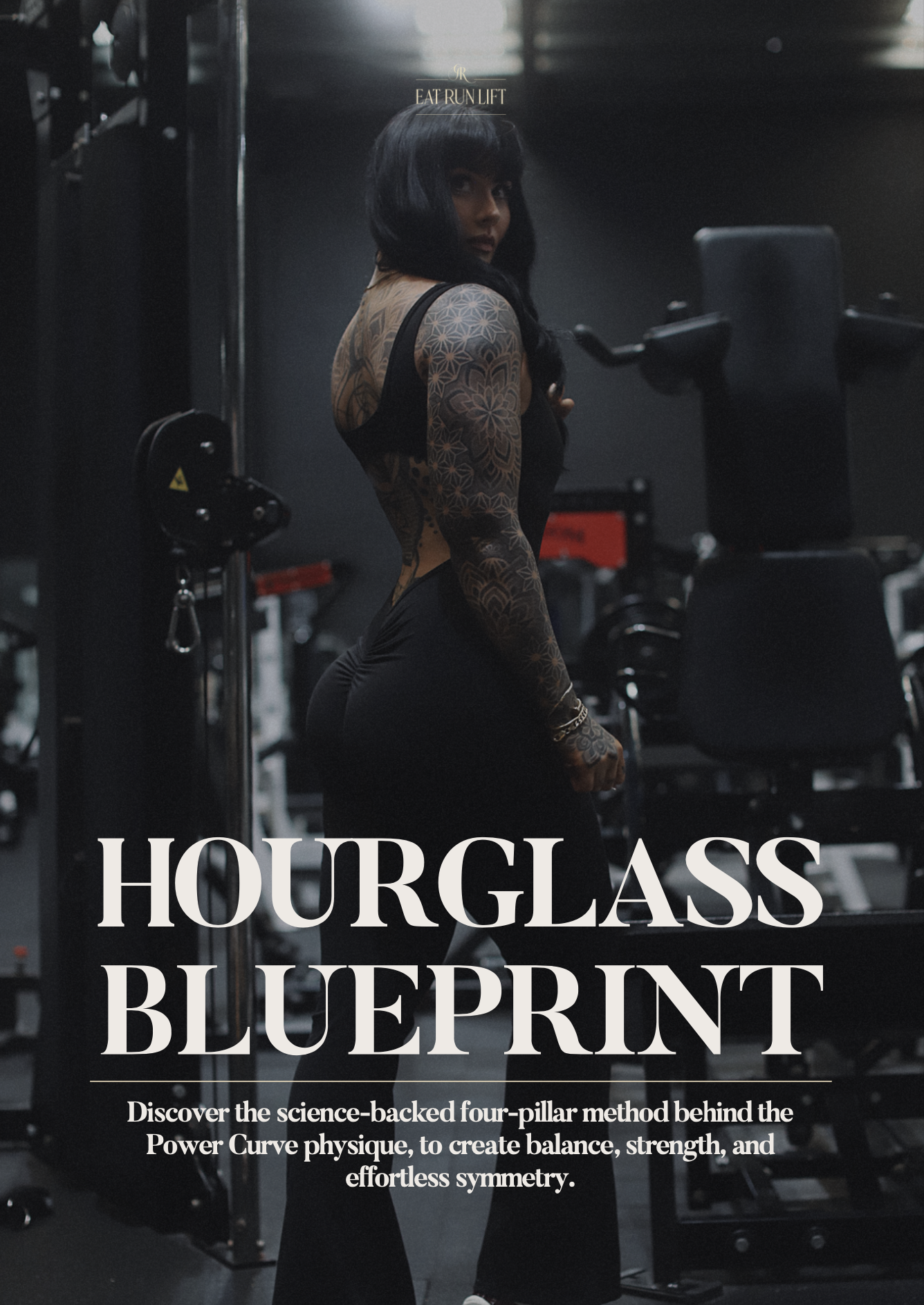
Inside I walk you through:
Weekly training setups
How to build shape without overloading your nervous system
Tips on recovery
👉 Download the free Hourglass Blueprint here:
Hey there, I’m Rachel!
NUTRITIONIST, PERSONAL TRAINER, WELLNESS COACH
If you’re ready to ditch the all-or-nothing mindset and build a strong, confident body—you're in the right place.
✨ Start with my free 5-day Mini Mindset Reset to design a healthy lifestyle that actually fits your life.
🍑 Or join The Power Curve Method, my signature hourglass training program built to shape your glutes, waist, and mindset from the inside out.
While we make every effort to make sure the information in this website is accurate and informative, the information does not take the place of medical advice.